Social Learning Platform Analysis
Platform Choice and Justification
Instagram is a social media platform that provides users with opportunities to create, share, and respond to a variety of posts, stories, reels, comments, direct messages, and hashtags from other users around the world. Although everything you see might be for entertainment, lifestyle content, and influencer culture, instagram could also be used as a platform for informal social learning. Users can choose who they follow, select what they want to like, share, comment, repost, and even who they privately message. Proof of instagram being used as a platform to learn from can be seen when searching up things like #basketballdrills, and common in my search history, #dinnerideas.
I chose instagram because it is a platform I have been using regularly since I was young, and I have noticed that I have been exposed to both the educational side and the entertainment side. For example, I have seen reels explaining basketball workouts, car tutorials, nutrition tips, and current life events while I scroll through my feed. Learning on instagram can often happen incidentally rather than a formal meeting or lesson. At the same time, instagram can narrrow its focus on appearance, popularity, advertising, and algorithmic recommendations. Thus, raising questions on how and what users learn, whose knowledge becomes visible, and whether the information they encounter is reliable or not.
This post is going to evaluate instagram as a social learning platform using four criteria; affordances, information disorder, digital identity, and algorithmic curation. Using these criteria will allow me to examine whether instagram is a helpful tool when it comes to learning, who might be benefiting from it, and what barriers may be limiting meaningful participation.
Analytical Framework
Instagram’s affordances allow for users to interact, learn, and share content through likes, comments, reposts, and direct messages. It’s easy design and accessibility can support learning, but Bates (2015) explains that educators should consider ease of use, privacy, networking, and whether the platform encourages meaningful interaction and feedback. Information disorder is found all over Instagram, appealing visuals, strong captions, and a high number of engagements can make a post seem credible when its not. Users need to use critical thinking when exploring ideas, integrating informations, and solving problems rather than believing every post they see online (Garrison et al., 2000).
Digital identity also plays a role on learning because creators present themselves through their profiles, posts, captions, and interactions. Although this can help build credibility, it can also build pressure on users and make them try to appear in a certain way. Finally, algorithmic curation explains what users see on their feed due to their previous interactions, who they follow, and what they spend the post time watching and looking at. Based on the algorithm, popular voices become more visible than others, even if their posts are less reliable. Learning is a envorment where it should be changing and there are different opportunities for engagement, representation, and action/expression (Laurillard’s, 2002 and CAST, 2024)
Platform Analysis
Instagram has so many options when it comes to interacting with posts, these options strenghten informal learning. Creators have the opportunity to share educational content using photos, infographics, videos, captions, hashtags, quizzes, and many more. An example of this could be, a well known NBA trainer posts a reel of them training a known high level athlete, then breaking down the drills used, then in the caption there’s a link to more videos of them training other athletes using different drills. With a wide variety of how information can be presented, learners can access it visually, through text, audio, and even though demonstration (CAST, 2024). With options like saving and sharing posts, and even direct messaging, these features relate to Bates (2015) and the emphasis on interaction and networking as a great way to use technology in a educational way.

This is a screenshot of a post I came across after I used the search option and typed in #fishingknots. This is a first hand example of how Instagram can present information in a very accessible and easy to follow manner.
However, not all information seen on instagram should be trusted. Due to the ease of accessibly, anyone can make an account and post content leading to information disorder. When scrolling on instagram, I have seen so many misleading posts about nutrition, fitness, health concerns, and real life events all while it looks reliable due to its appearance. False information mixed with instagrams affordances can allow for rapid spreading leading to more people believing these posts. Without looking deeper into the creator and their credibility, false information can create a bad learning environment. Just because there is a high number of people engaging along with a strong visual appeal, it doesn’t mean the information provided can be immediately trusted (Machado et al, 2025).
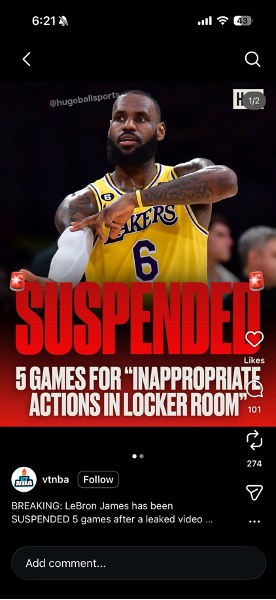
This is an example of a post that is visually strong and uses big words, real pictures, and real sports news logos but turns out to be completly false. When looking at it from a community of inquiry perspective, the post may trigger curiosity, but it doesn’t cause deeper critical thinking that is needed to evaluate the authenticity of it (Garrison et al., 2000).
Ones digital identity also plays a role when shaping a users learning on instagram. Creators have the ability to build credibility by showing their qualifications, teaching experince, and consistent content creation. Having the ability to see artifacts on someone’s credibility can allow others to have trust in what they share online since they appear to have actual knowledge on a certain topic. The downside of this is that the platform can encourage users to have an “idealized” appearance online. This can lead people to comparing themselves to peers who seem to be more fit, more productive, successful, which can cause a loss in confidence, quitting a sport or activity, and sometimes depression. Since instagram rewards creators who increase the amount of time people stay on the platform, creators can sometimes chase the fame, prioritize followers, and hunt down brand deals which could take away from strengthening their viewers knowledge.
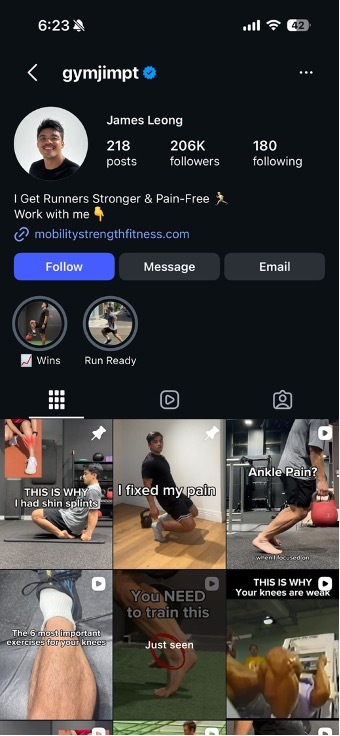
The screenshot above illustrates how digital identity can be used to support learning by allowing users to see the creator’s background and whether the information should be trusted or no.
Finally, algorithmic curation affects what and how people learn on instagram. The algorithm will suggest posts and accounts based on ones previous likes, follows, saves, shares, and watch time. This strategy can be useful when it comes to learning since it can strengthen the users knowledge on a certain topic, however, it can also create somethin called an echo chamber. An echo chamber is when users repeatedly see similar perspectives or types of content, causing a plateau of learning. Another issue with the algorithm is that it may prioritize popular content rather than the most acccurate or the most inclusive content. The algorithm could be hiding smaller creators who are posting more accurate information just because bigger creators seem more attractive.
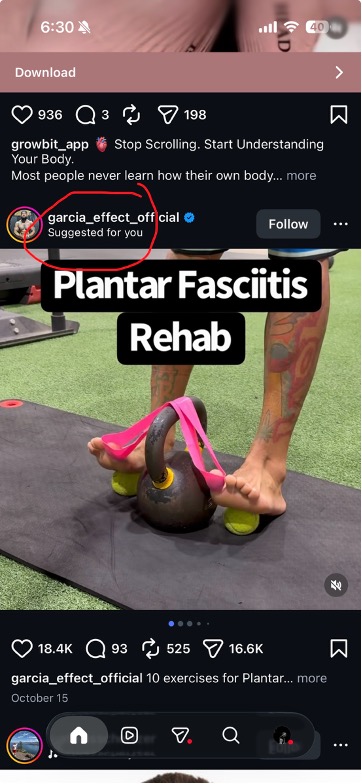
This screenshot shows algorimic curation because Instagram is personally suggesting this based on a previous search due to an injury of mine.
Reflection and Impications
This analysis has proven that instagram can be a useful platform for informal learning, but the benefits come from how the learners use it. Instagram has a variety of ways people can see the information they learn from, different formats such as reels, photos, captions, polls, and comments allow for users to interact with content, ask questions, save resources, and connect with communities. Instagram provides the ability to continue learning through acting on content, receiving feedback, and adapt understanding through continued interaction (Laurillard, 2002).
However, due to instagrams short from and visual design, users are pressured into quick consumption of information rather than thinking deeper. Information disorder continues to be an issue, posts with strong visual appeal, popularity, and connection to someone on an emotional level can easily make users believe the information is true rather than digging to find real evidence. The community inquiry framework suggests that learning requires cognitive, social, and teacher presence (Garrison et al., 2000). Although Instagram has a strong social presence, cognitive and teaching presence can be weaker because of the lack of clear goals, assessment, instructor, or even discussion.
Due to instagrams algorithms, users have the opportunity to strengthen their knowledge on a certain topic since instagram will suggest posts and accounts thT are based on their interactions. However, this can create an echo chamber which can overall hurt their leaning in the long run. Instagram doesn’t have the ability to suggest new topics since it is trying to continuously provid already chosen ones, this can make attempting to grow a personal learning network very difficult and limited.
Overall, instagram can support informal, social, and visual learning opportunities especially when users are engaging with credible accounts and creators. Looking deeper into information you see can help users filter out false information and only pay attention to real posts. Instagram should be treated as a tool fro learning, rather than a source of knowledge. Using instagram as a place to start discussions, introduce topics, and share resources followed along with structured discussions or assignments is a great way to have students think more critical about what they see and believe, interact with, and share online.
Resources
Bates, A. W. (2015). Teaching in a digital age: Guidelines for designing teaching and learning. Tony Bates Associates. https://opentextbc.ca/teachinginadigitalage/
CAST. (2024). Universal Design for Learning Guidelines version 3.0. https://udlguidelines.cast.org/
Garrison, D. R., Anderson, T., & Archer, W. (2000). Critical inquiry in a text-based environment: Computer conferencing in higher education. The Internet and Higher Education, 2(2–3), 87–105. https://doi.org/10.1016/S1096-7516(00)00016-6
Laurillard, D. (2002). Rethinking university teaching: A conversational framework for the effective use of learning technologies (2nd ed.). RoutledgeFalmer.
Machado, R. S., et al. (2025). Misinformation or education? A comparative analysis of Instagram posts related to full mouth rehabilitation. PMC. https://pmc.ncbi.nlm.nih.gov/articles/PMC12328297/